Brand OS
Designing the Infrastructure Behind the Brand
00
problem
Several years ago, I was brought into a Fortune 500 organization to redesign a core digital product. It quickly became clear the issue was not only interface design, but infrastructure. Brand assets were scattered, guidelines were outdated, and teams had different versions of the brand docs. Before design work could move forward, we had to stabilize and tighten their brand system. That experience exposed a recurring weakness across enterprises: brand lives inside static documents instead of operational systems. Teams waste time searching for files. Vendors request assets that should already be centralized. Marketing launches with outdated tokens. Interpretation replaces clarity. As Métisse Studio expanded across digital, editorial, and experiential work with multiple collaborators, I saw the same risk forming internally. A highly visual brand with many touchpoints cannot scale on PDFs and shared folders alone. We needed infrastructure.
solution
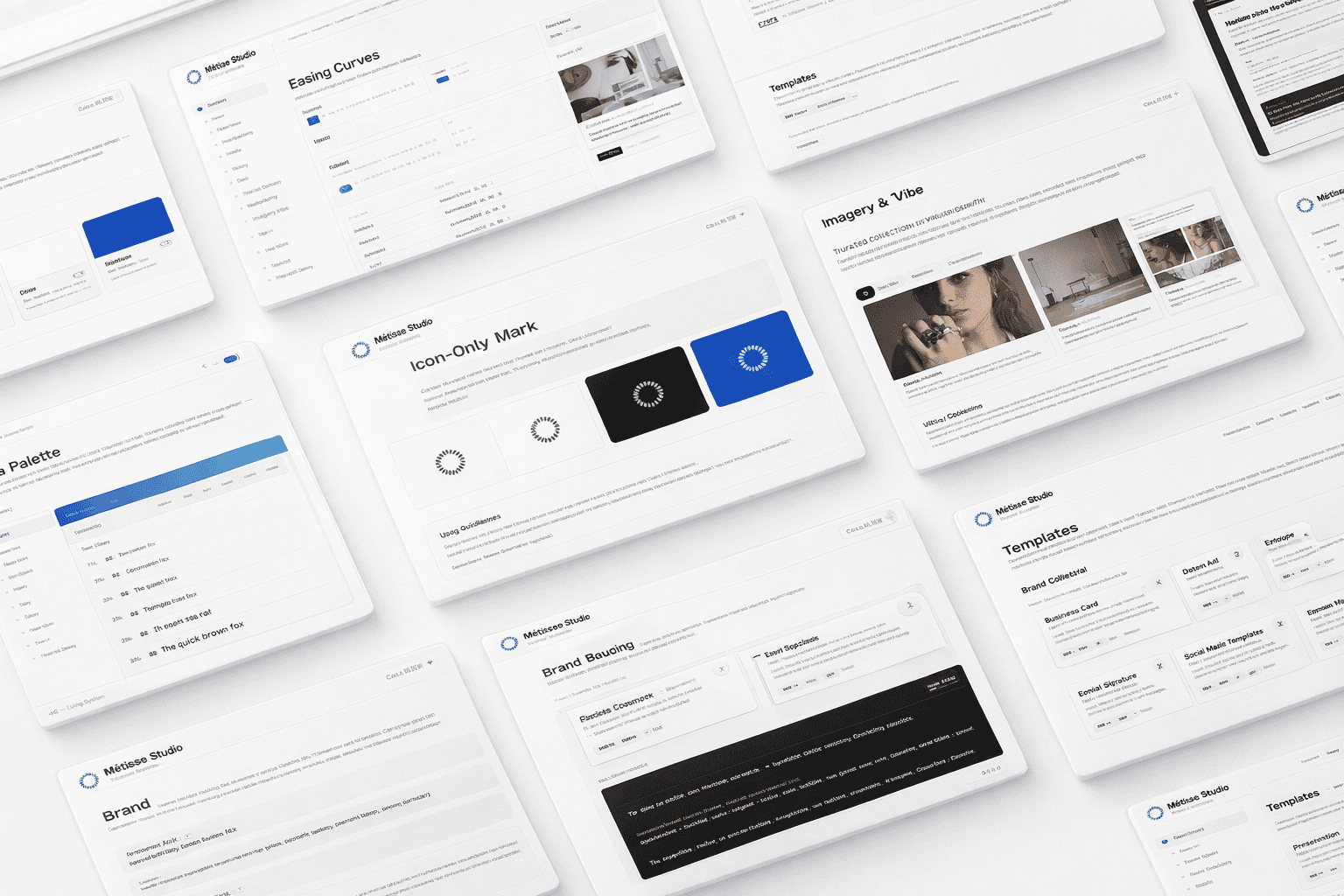
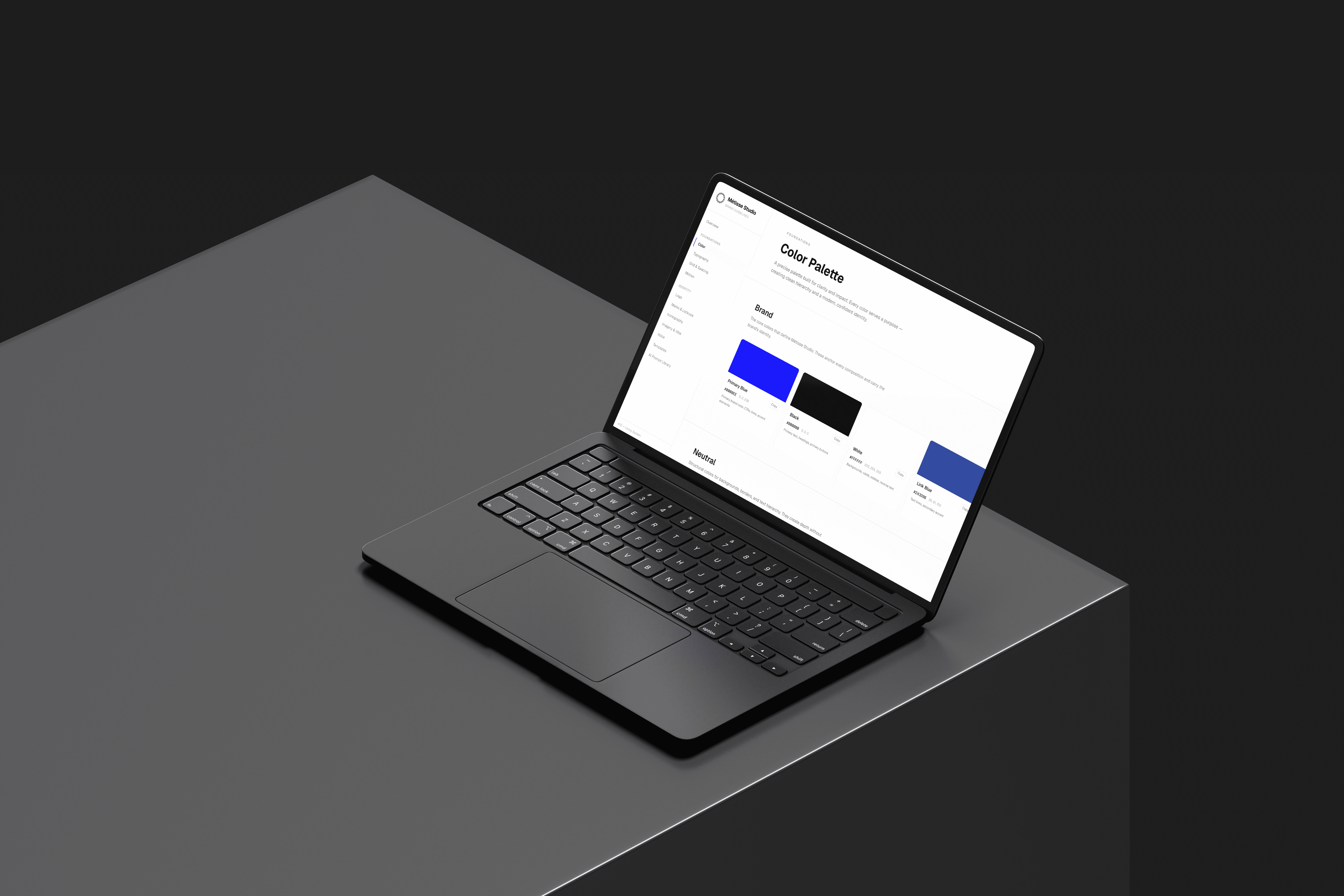
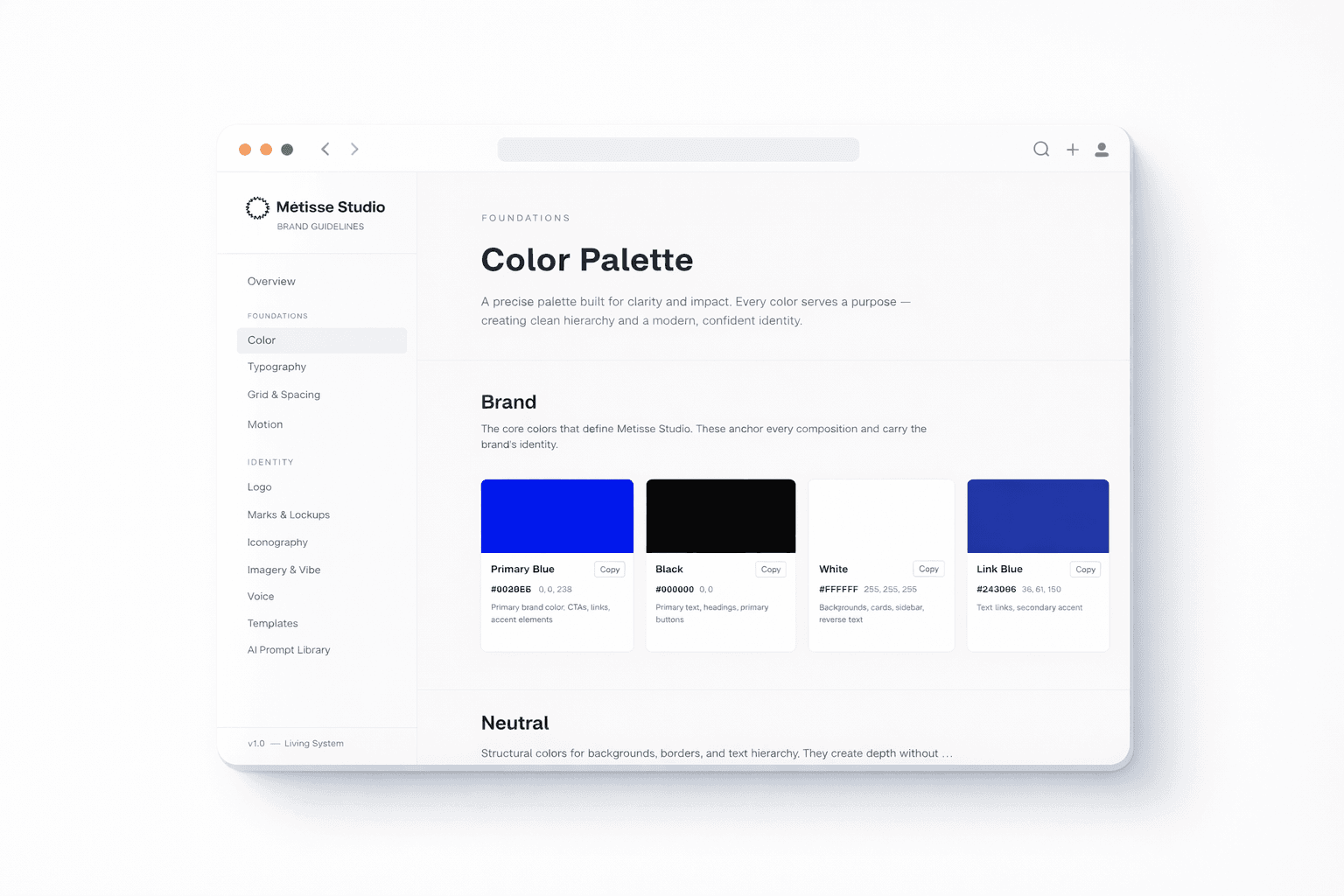
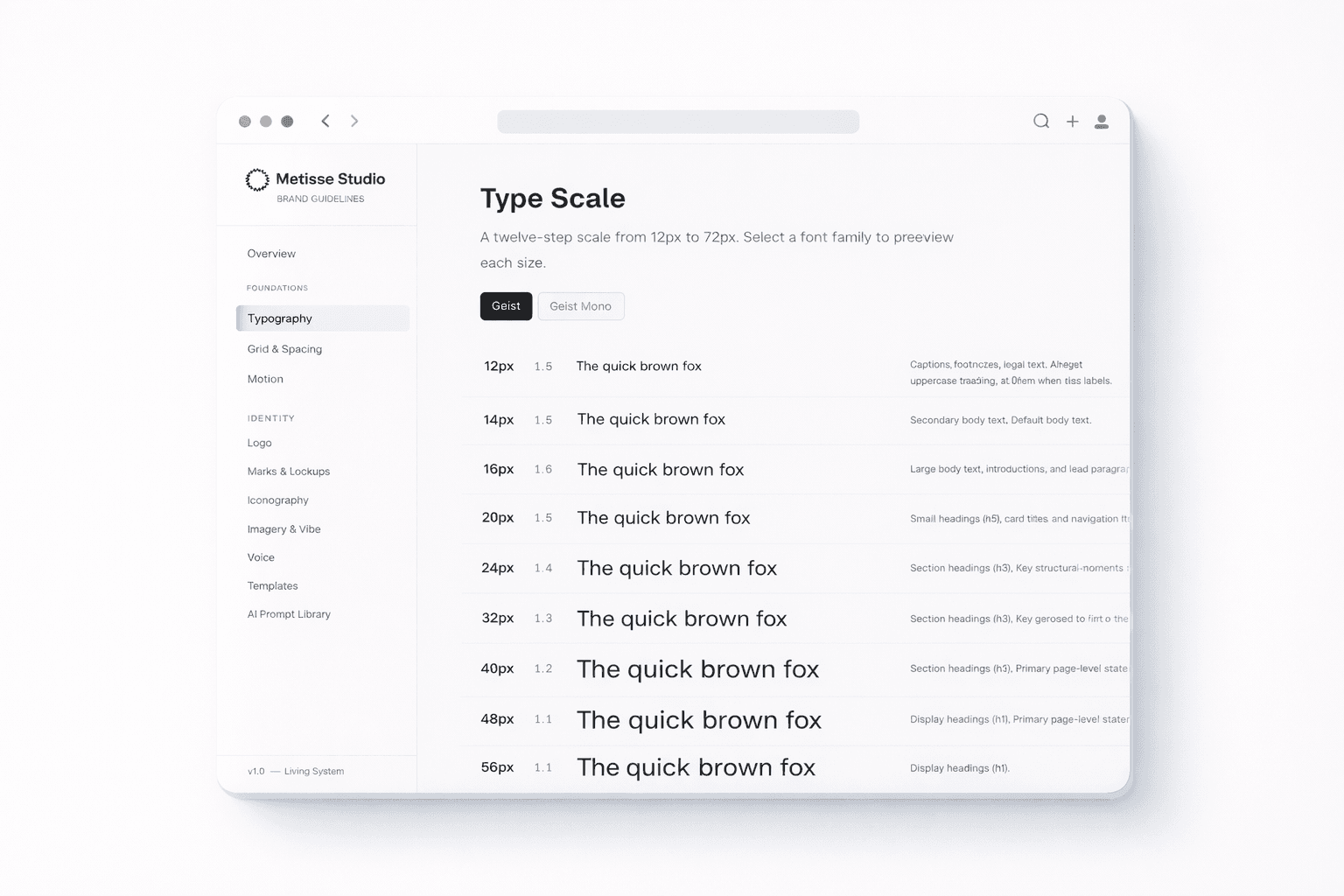
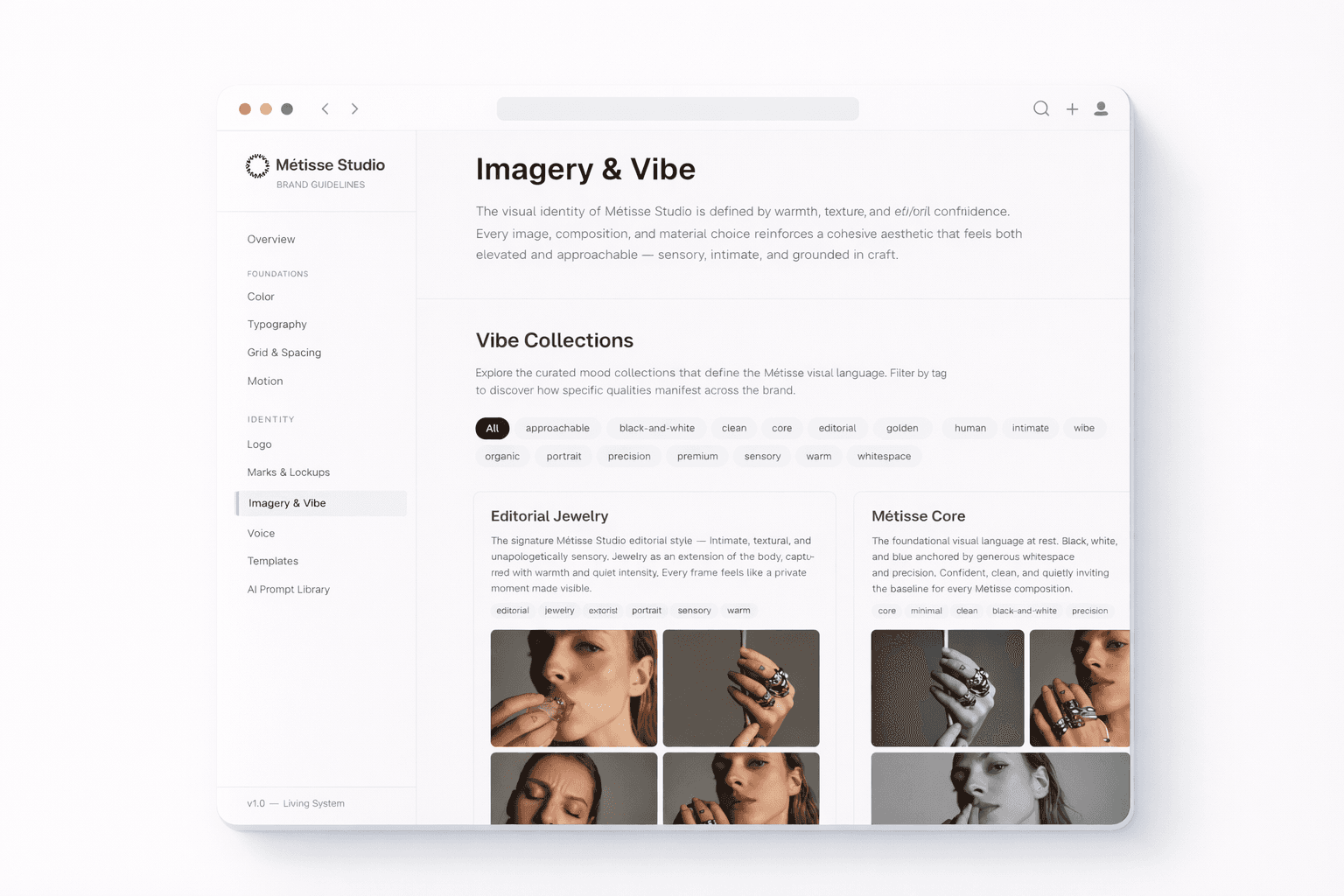
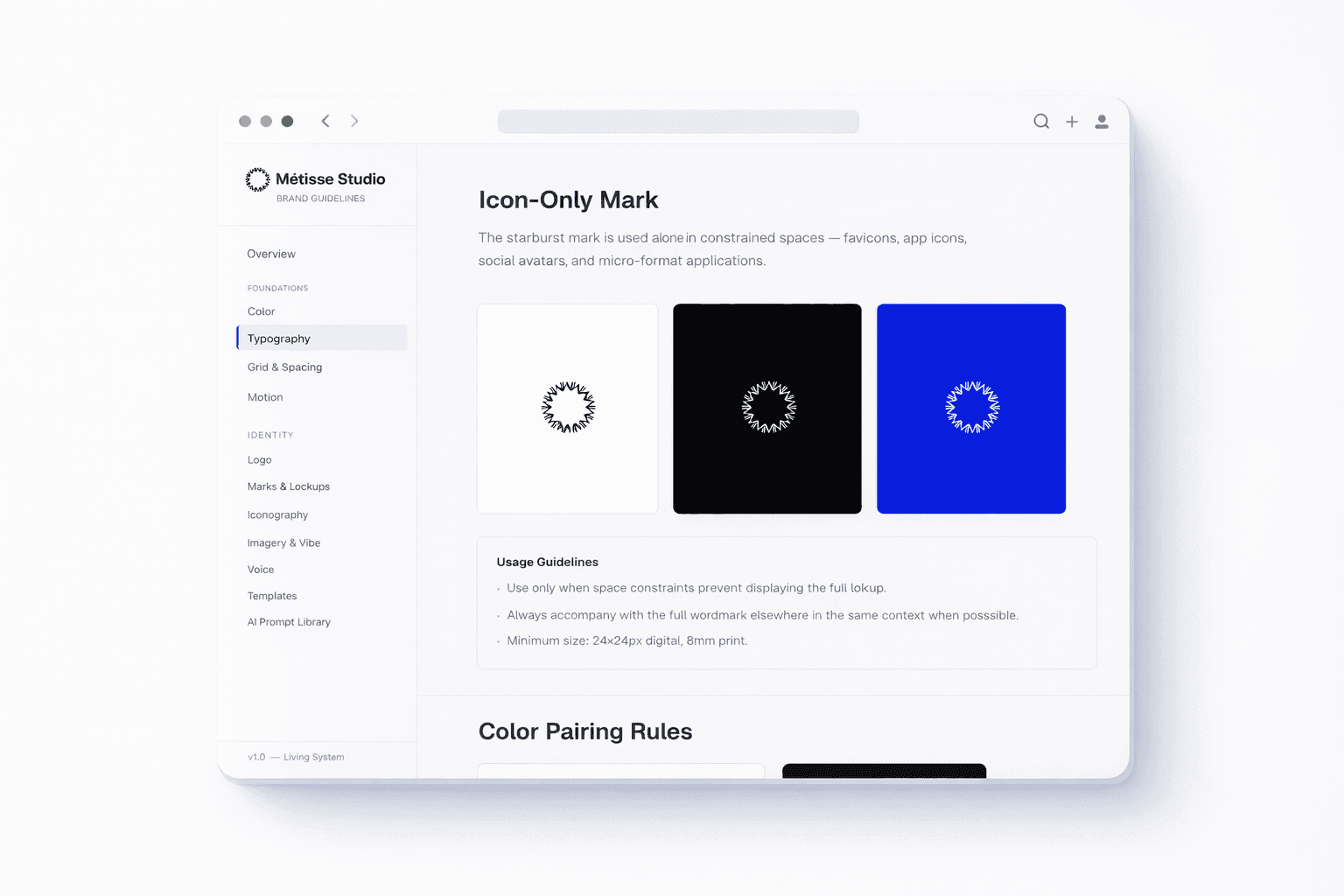
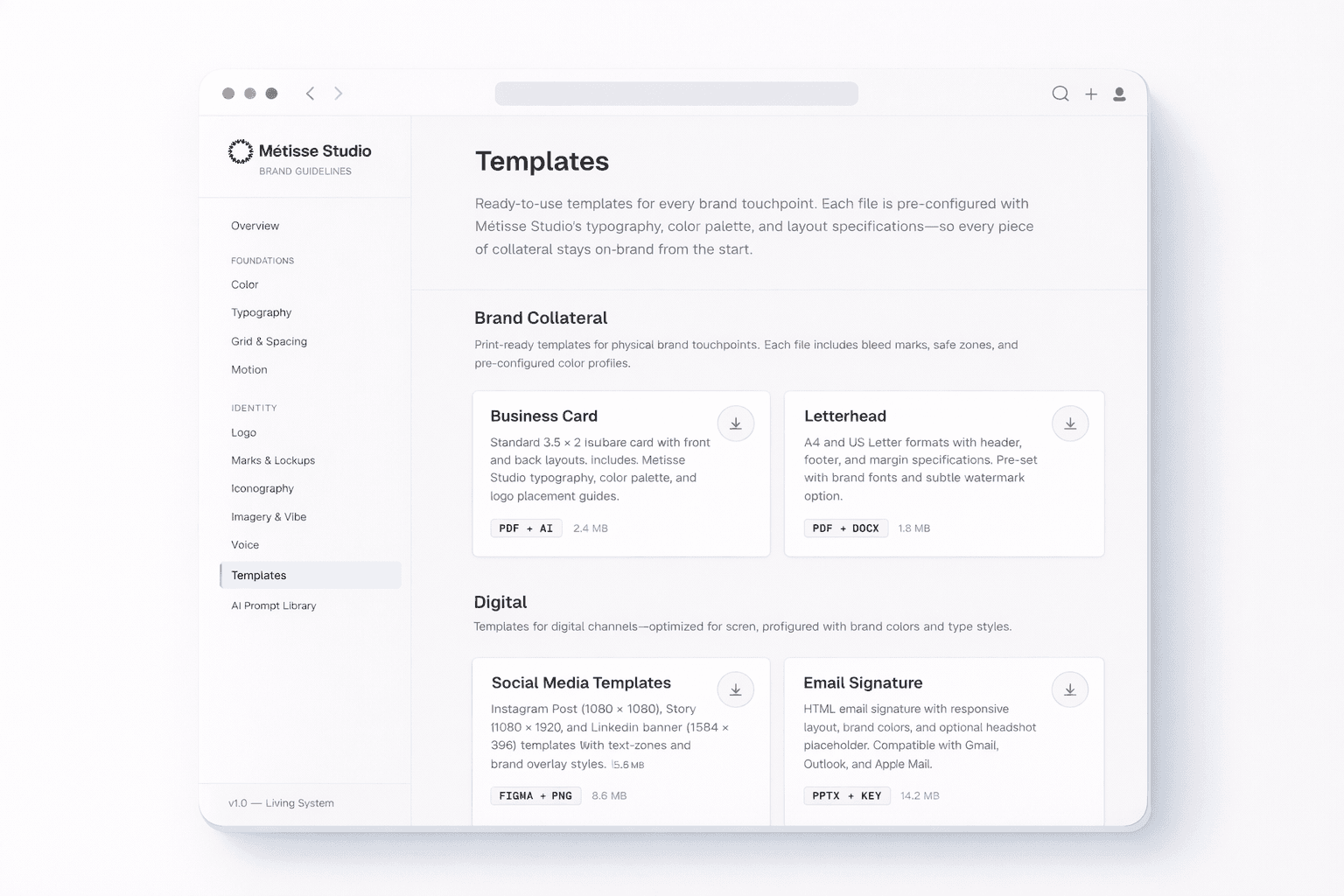
We built a Brand OS for Métisse Studio. Not another deck. Not another static guideline. A living, searchable system that holds the brand together. Every asset, every rule, every visual cue lives in one place. Colors are copied in a click. Logos are downloaded in seconds. Photography is curated and intentional. Voice is clear and consistent. Even new content can be generated within the guardrails of the brand. Instead of chasing files or debating interpretation, teams move with clarity. Brand stopped being something we referenced occasionally. It became something we operated inside.
PROCESS
The system was built on Next.js architecture with TypeScript and Tailwind. Brand data was separated into structured JSON schemas and database-backed entities to ensure scalability.
We implemented a Postgres database to manage metadata including brands, assets, tokens, voice rules, prompts, and user roles. All heavy assets such as logos, photography, templates, and documents are stored in object storage and linked via secure file keys. The database handles versioning, approval states, tagging, and role-based access controls.
A centralized asset model includes:
– Asset ID
– Brand ID
– Type (logo, photography, template, icon, document)
– Tags and categories
– File URL and storage key
– MIME type and dimensions
– Version number
– Status (draft, approved, deprecated)
– Created and updated timestamps
Tokens, voice rules, and prompt templates are stored as structured JSON objects tied to brand IDs, allowing updates to propagate globally without manual file edits.
Trade-offs were intentional. We prioritized system stability over decorative UI. We limited the initial feature set to core operational needs: searchability, version control, structured tagging, and role-based permissions. We avoided building an overly complex CMS and instead created a focused admin interface designed specifically for brand governance.
The admin layer includes master-level controls for updating tokens, approving assets, managing versions, and assigning permissions. Only the master administrator can modify foundational tokens or archive assets. This prevents drift and maintains system integrity.
Multiple Access Points
The OS supports role-based access segmentation to ensure each collaborator sees what is relevant to their function.
Print vendors receive access only to print-ready assets, including CMYK color tokens, vector logos, high-resolution photography, and packaging templates. They do not see social templates or experimental campaign assets.
Marketing teams access messaging hierarchies, approved brand photography, current logo packs, prompt libraries, and campaign templates.
Social media teams access formatted logo variations, approved caption frameworks, aspect-ratio-specific imagery, and copy generation tools tailored to platform constraints.
Developers access token exports including color variables, spacing scales, typography systems, and component references.
Each role operates within a filtered view of the same underlying database, reducing noise and eliminating unnecessary exposure to unrelated assets.
Features
The Brand OS includes:
– Structured token system (colors, typography, spacing, motion)
– Version-controlled logo library
– Tagged photography archive
– Role-based asset segmentation
– Prompt library tied to brand context
– Version history and approval workflows
– Downloadable asset bundles by type
– Dynamic token exports for development
– Master admin dashboard
– Role and permission management
– Bulk upload with metadata extraction
– Automated asset versioning
– Global search engine
The global search function is a core operational feature. It indexes asset titles, tags, metadata fields, token names, voice rules, and prompt templates. A query such as “oxide social 1080” immediately returns the Oxide accent token, approved 1080x1080 social templates, and related caption prompts. The goal is zero friction retrieval.
RESULTS
The impact has been operational and measurable.
Collaborator onboarding time has decreased by more than 60%. What previously required manual file transfers, explanation calls, and repeated clarifications now requires a single system link.
Production inefficiencies have been significantly reduced. By eliminating duplicated work, asset misusage, and excessive revision cycles, we estimate annual savings of $22,000.
Collaborative production costs have dropped by approximately 20% because contributors begin aligned within a shared framework rather than negotiating interpretation mid-project.
Campaign execution has accelerated. Updates to tokens or assets propagate instantly across the system, reducing turnaround time for launch materials.
Brand consistency has improved across digital, print, and social channels without constant oversight. Teams operate with clarity instead of uncertainty.
What began as a response to enterprise-level predominance of static documentation evolved into a system that rivals many Fortune 500 setups in governance and operational efficiency.
Brand no longer slows growth. It enables it.
year
2026
timeframe
3 Months
category
Product
delivery
Brand Design System
01
02
03
04
05
06