The Department of Time
Redesign Our Relationship with Time
00
problem
Most time and productivity systems are built around output, efficiency, and optimization. They measure how much gets done, not how life is actually experienced. As a designer who has spent years building systems that shape behavior, I became increasingly aware that these tools were flattening time rather than helping people understand it. They encouraged speed, comparison, and guilt, but offered little insight into presence, energy, or fulfillment. The problem was not a lack of tools. It was that time itself had been reduced to a metric rather than treated as a lived experience.
solution
The Department of Time is my attempt to redesign how time is structured and evaluated. Rather than functioning as a traditional productivity app, it reframes time as something to be designed, tested, and reflected on. Users adopt and experiment with daily routines inspired by historical figures, creators, and thinkers, not to replicate outcomes, but to experience how different structures affect attention, energy, and meaning.
AI is used deliberately and narrowly. It supports reflection, pattern recognition, and iteration, but does not prescribe behavior or replace judgment. The system is designed to help users understand how well moments are lived, rather than how efficiently time is spent. The project is publicly accessible at https://www.thedot.space and is currently in active production.
Origin and framing
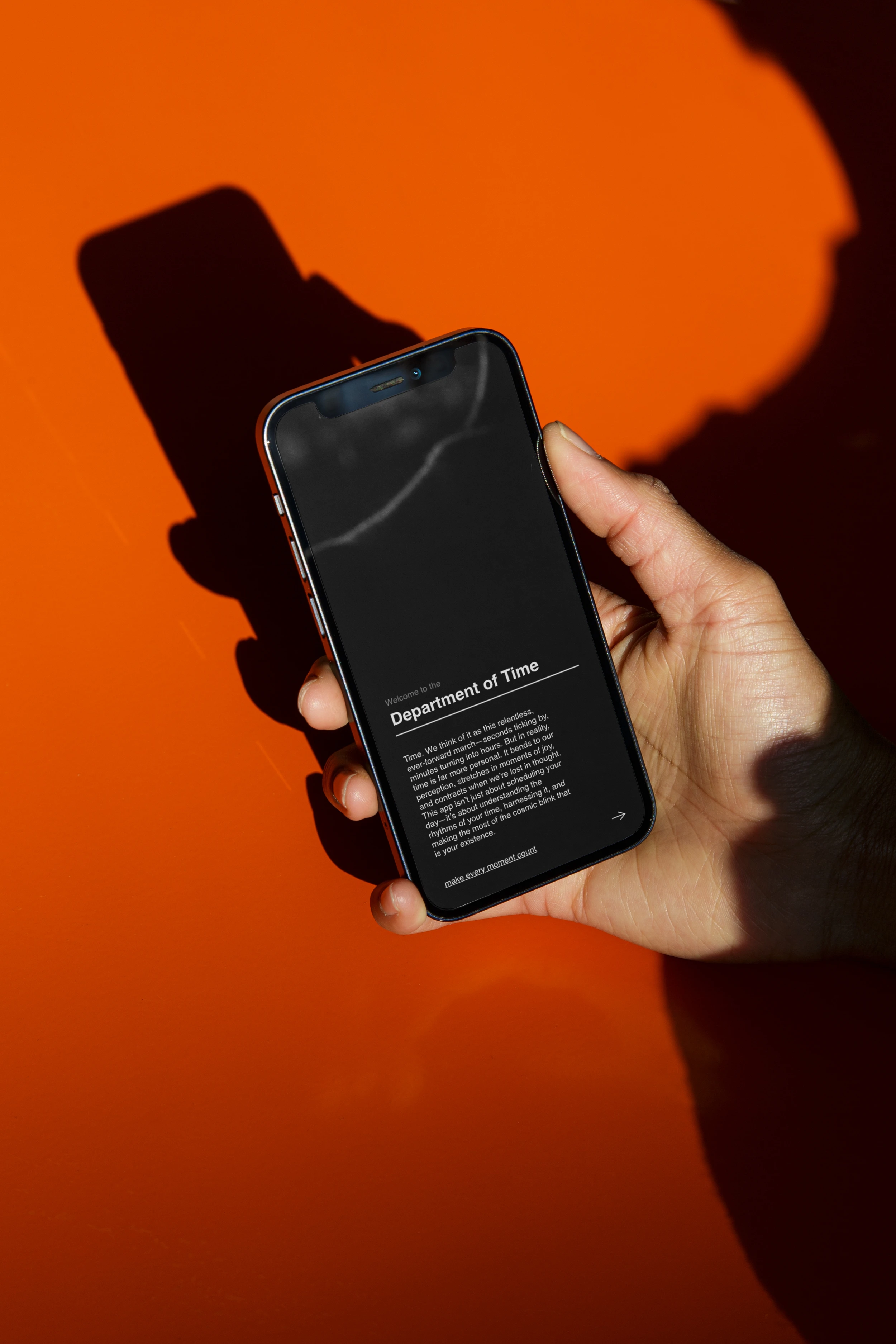
The project emerged from direct dissatisfaction with time blocking tools, habit trackers, and productivity frameworks that prioritize performance over experience. The initial question was not how to manage time better, but how to design time in a way that acknowledges its emotional and human dimensions. The Department of Time began as an exploration of time as a medium, not a resource.
System design
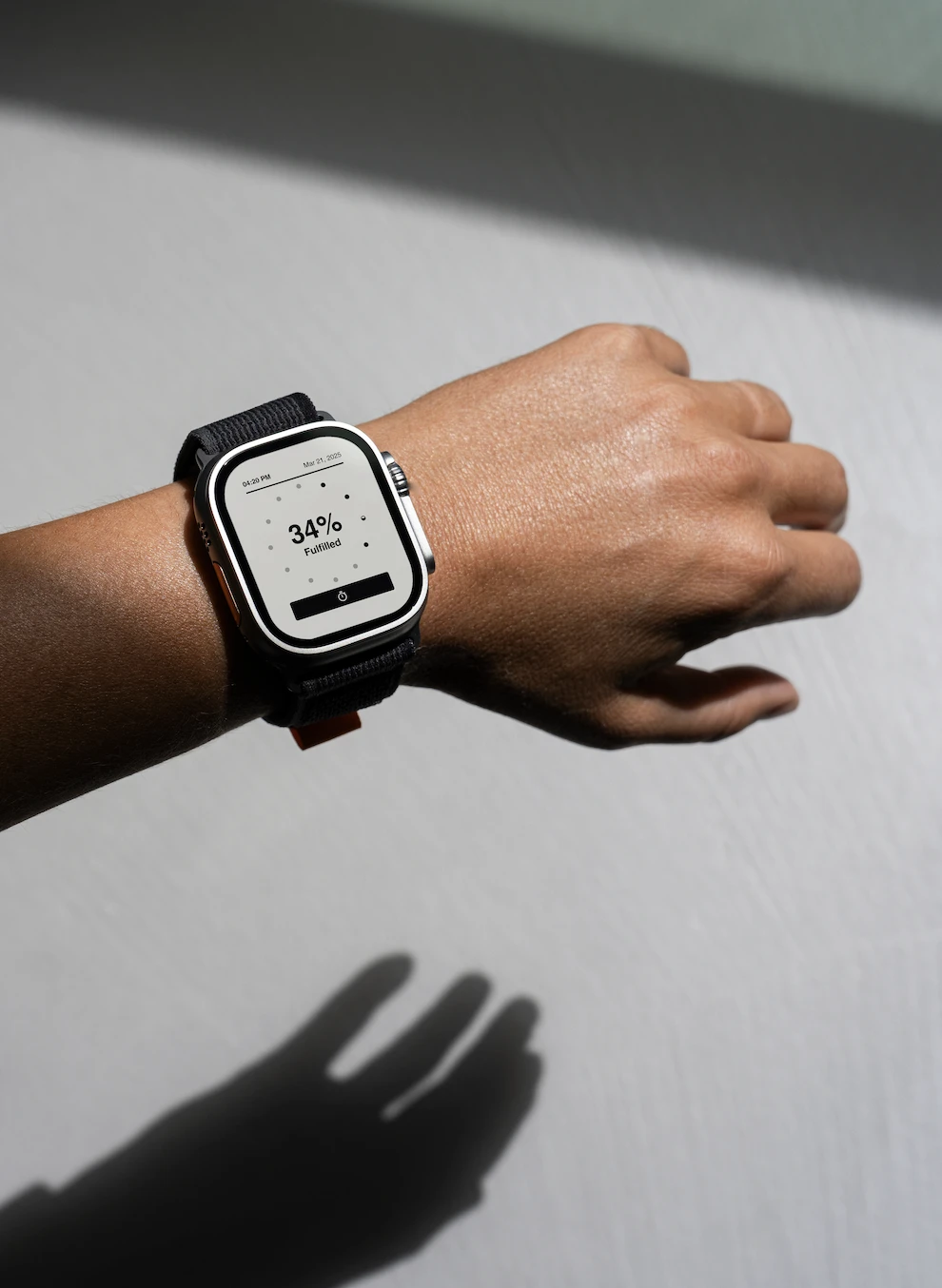
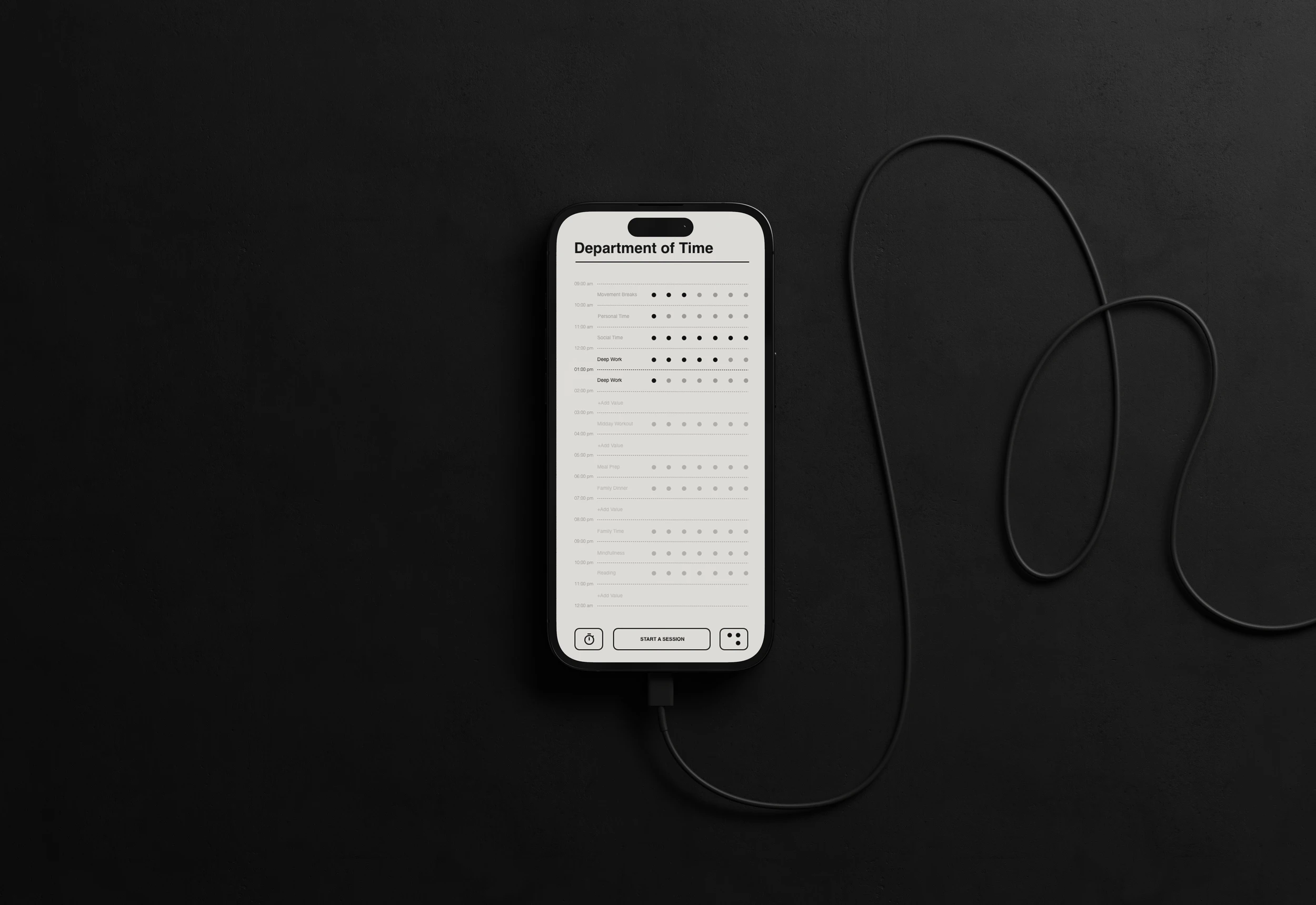
Days are structured into blocks, but success is not measured by task completion. Users rate their experience of each block, focusing on presence, clarity, and fulfillment. Over time, the system reveals patterns between structure and lived experience, allowing users to adjust routines based on how days actually feel, not how they look on paper.
Use of AI
AI is integrated where it adds clarity, not where it compensates for uncertainty. It does not generate routines arbitrarily or optimize for productivity metrics. Instead, it analyzes user feedback and reflections to surface patterns and suggest incremental adjustments. The role of AI is supportive and interpretive, helping users notice relationships they might otherwise miss.
Development approach
The product has been developed using Replit as the primary environment. This was a deliberate choice to explore new ways of building and shipping software outside traditional agency workflows. Replit enabled rapid iteration, direct experimentation, and close proximity between concept and execution. The development process mirrors the philosophy of the product itself: iterative, observable, and responsive.
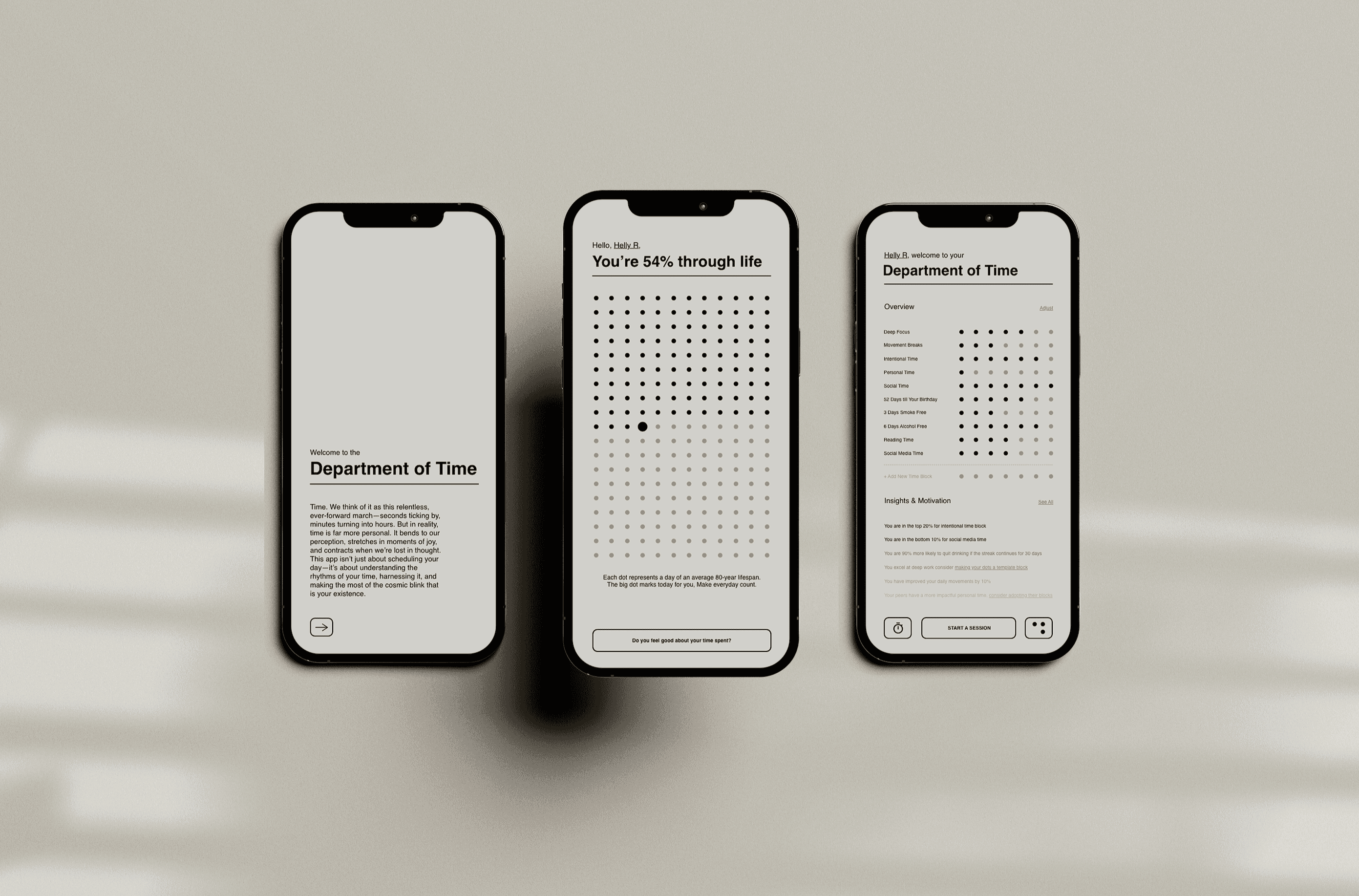
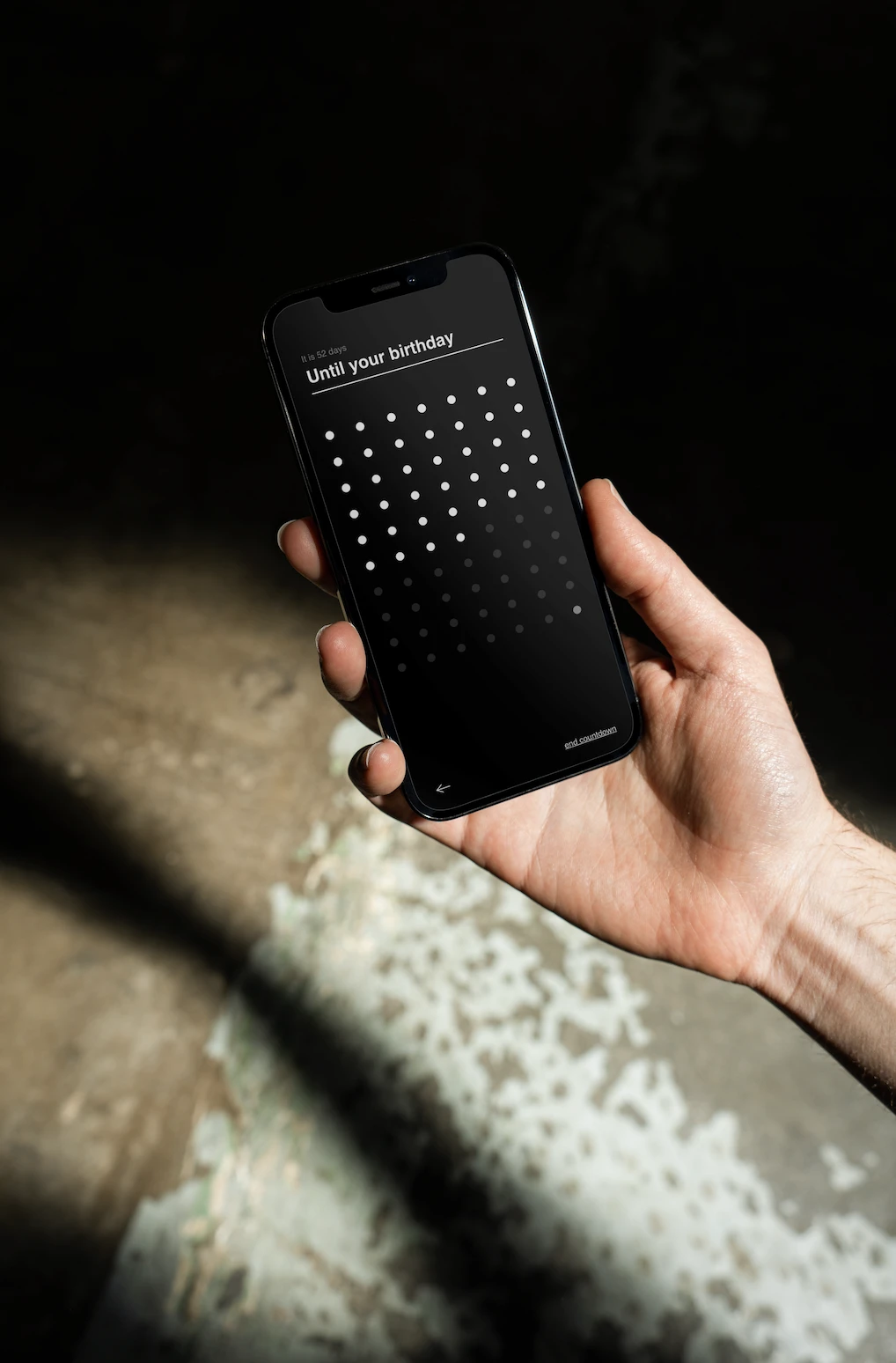
The design language of The Department of Time was intentionally stripped down, drawing from old switchboards, industrial control panels, and instruction manuals where clarity mattered more than aesthetics. Everything is reduced to essentials. No decoration, no persuasion, no noise. The central design decision was anchoring the entire system around a single dot. The dot functions as the smallest possible unit, a marker for one discrete instance of time. Not an hour, not a task, but a moment. By treating time as a series of dots rather than blocks to be filled, the interface avoids abstraction and forces attention onto presence. Each dot represents something that either happened with awareness or did not. This constraint shaped every visual and interaction decision, turning the product into a measuring instrument rather than a motivational interface.
Routines as experiential frameworks
Rather than treating routines as habits to be enforced, the system treats them as frameworks to be experienced. Users can adopt the structure of a writer, philosopher, or historical figure for a day and observe how that structure shapes their attention and energy. Feedback from these experiences informs future recommendations, creating a loop grounded in lived reality rather than idealized performance.
Production status and community response
The Department of Time is currently in production and evolving through active use while remaining closed to the wide audience. It is not positioned as complete. Features, routines, and frameworks are tested in real conditions, refined, or removed based on observed outcomes and user feedback. Development is happening in segments, with early adopters signing up organically and slowly onboarded when possible and are contributing insights that directly influence the direction of the product. The early response has validated the underlying need for a more human approach to time, while also shaping what the system is becoming.
Reflection
This project represents an ongoing exploration of how design, technology, and humanity intersect. It treats time as something that can be shaped with care rather than optimized for output. AI is present but constrained. Structure exists but remains flexible. The Department of Time is not about doing more. It is about understanding how time is lived, one day at a time.
year
2025
timeframe
In Production
category
AI Concept
delivery
Personal Project
01
02
03