Systems of Ideological Subversion
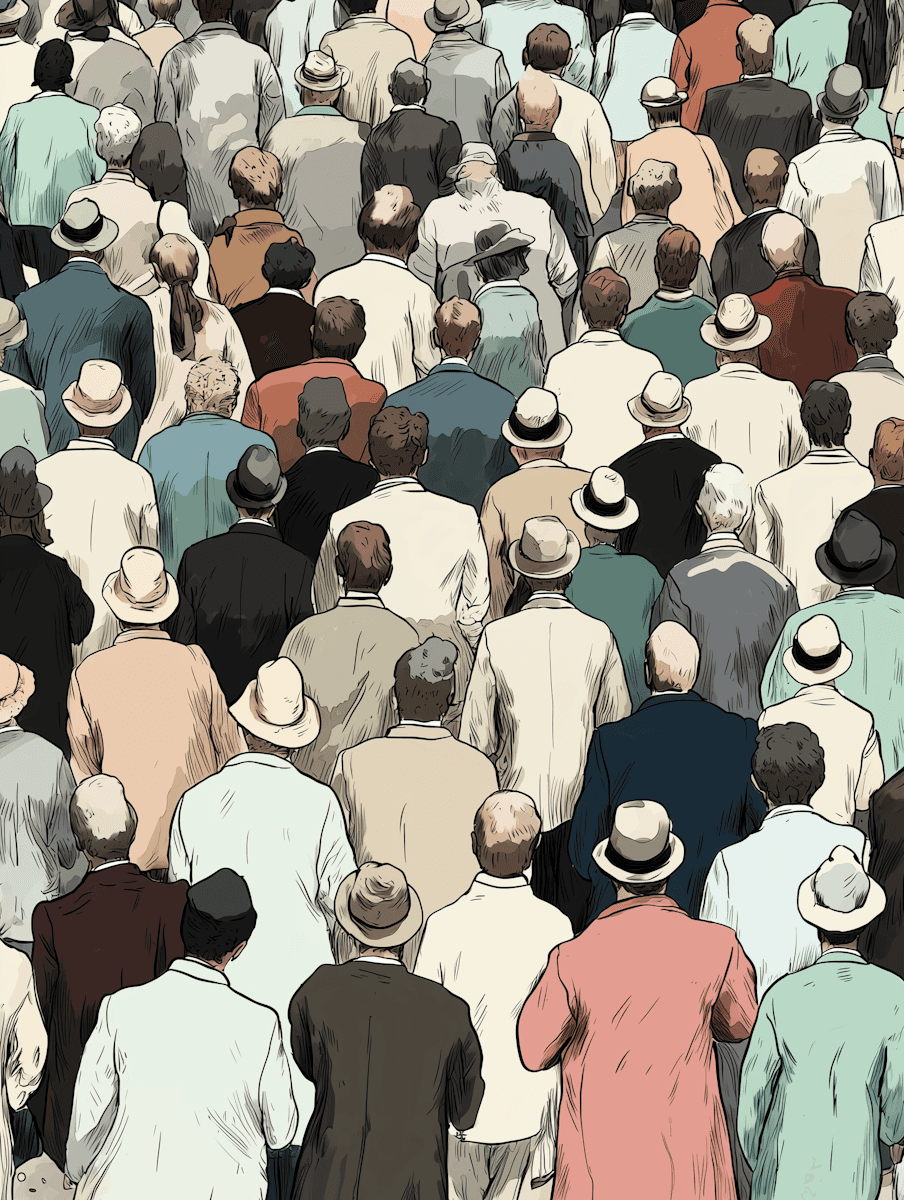
There is a reason certain societies do not fall apart in a single dramatic moment. They rarely implode all at once. More often, they are gradually reshaped. The change happens slowly, structurally, and often invisibly. What appears from the outside as chaos or decline is frequently the result of incremental redesign.
Years ago, Yuri Bezmenov, a former Soviet journalist who defected to the West, described what he called the stages of ideological subversion. His analysis has been referenced in political commentary and historical discussions of Cold War influence tactics. What struck me about his explanation was not its geopolitical implications. It was its structure. The model reads less like a spy thriller and more like a blueprint for systemic transformation.
The first stage Bezmenov described was demoralization. This phase does not look dramatic or revolutionary. It unfolds slowly, often over decades. During this period, cultural, educational, and informational environments begin to shift. The objective is not to convince an entire population to adopt a specific ideology. Instead, it is to weaken confidence in existing frameworks of truth. When people begin to doubt their institutions, their history, and even their own ability to interpret information accurately, coherence starts to erode. A society does not need to be persuaded of one dominant narrative to destabilize. It only needs to lose trust in its capacity to distinguish what is credible from what is not.
Once that foundational trust weakens, the next phase emerges: destabilization. In this stage, core systems such as the economy, governance structures, and social cohesion come under strain. Tensions that once existed at manageable levels are amplified. Fault lines widen. Public discourse becomes more polarized. The systems people rely on for stability begin to feel unreliable or ineffective. Importantly, destabilization does not require overt sabotage. It can operate through the magnification of existing divisions and pressures until the perception of stability becomes fragile.
The third stage is crisis. What was gradual now becomes acute. Institutional weaknesses that were previously tolerable appear intolerable. Public trust erodes further. In moments of crisis, ideological debates often give way to a desire for immediate relief. People become less focused on abstract principles and more focused on restoring order. In this environment, solutions that once seemed extreme or unthinkable can suddenly feel acceptable if they promise stability. Crisis compresses decision making and lowers resistance.
The final stage is normalization. Once new conditions settle in, they gradually become the baseline. What once felt alarming becomes routine. The previous state of affairs fades from collective memory, and the redesigned environment becomes accepted as the new reality. Resistance does not necessarily disappear through force. It diminishes through adaptation. People adjust to the new operating conditions because they appear permanent.
When I reflect on this framework today, I do not see it as a relic of Cold War rhetoric. I see it as a reminder that influence operates through architecture. It is embedded in systems, incentives, and information flows. When environments are designed to prioritize attention over clarity and engagement over truth, fragmentation is not an unintended consequence. It is the predictable outcome of the system’s logic.
Recognizing this does not mean succumbing to cynicism. It means acknowledging that societies, like products or organizations, are shaped by design decisions. Structures determine behavior. Incentives shape perception. Information architecture influences belief. If coherence can be dismantled gradually through systemic pressure, it can also be rebuilt through intentional design.
Societal stability is not maintained by accident. It is maintained by structure. And structure, whether in technology, business, or governance, is always designed.
-Stanley Vaganov, Brutally Human