The Slow Disappearance
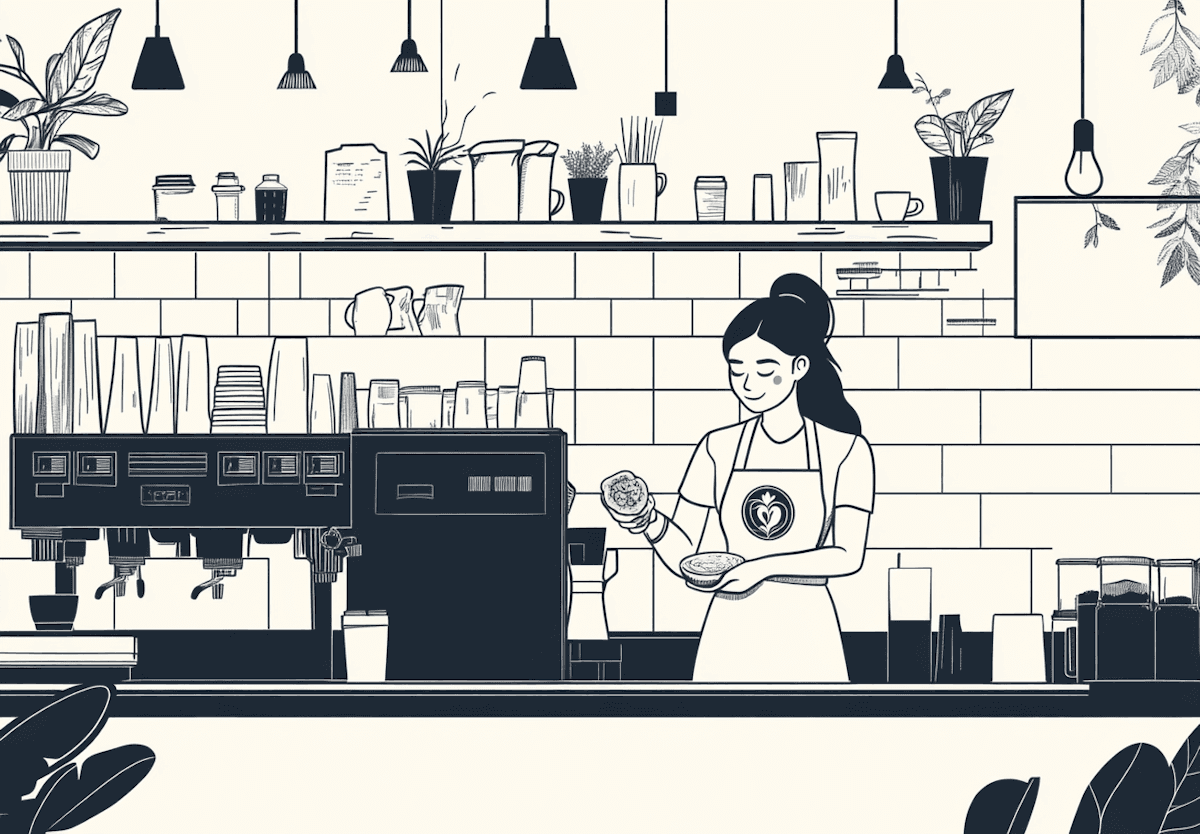
There is a coffee shop in Brooklyn that used to be the kind of place people talked about. Not because the coffee was exceptional, though it was good, not because of the pretty space, although it also was.. People talked about it because walking in felt like something. The light was warm in a specific way. The cups were a particular shade of off-white that nobody could quite name but everyone noticed. The staff talked to you like they had been expecting you. The whole place had a feeling, and that feeling had a name, even if nobody ever wrote it down anywhere. I loved the place. It felt like a movie slow burn movie that wasn’t about anything, yet everything all at once. Like Moneyball or Lost in translation. IYKYK.
That was the brand. Not the logo on the window. Not the font on the menu, not the interior decor…it was how it made me feel every time I showed up.
Then the owner opened a second location. It was further down the avenue where my friend lived so every time I visit her we would stop by. I was excited because I was always raving about it to her.
It started small, the way these things always do.
The second location needed cups. The original supplier was backordered, so they found someone else. Close enough, the owner thought. Nobody is going to notice the difference between two shades of off-white. And honestly, most people did not, not consciously anyways. But something registered, the way something always registers when a room is two degrees colder than it should be. You cannot name it, you just feel slightly less comfortable than you expected to.
The second location needed staff. They hired good people, trained them quickly, handed them a one-page document about the brand that someone had written in a hurry and never updated. The document said things like “warm” and “genuine” and “community-focused,” which are words that mean something specific to the person who wrote them and almost nothing to the person reading them for the first time on their third day of work.
The second location needed a social media presence. The person running it was doing their best, but they had not been to the original location more than twice. They used a slightly different font because they could not find the original file. They used brighter photos because brighter photos get more engagement. They wrote captions that were friendly and professional and completely indistinguishable from every other coffee shop account in the city.
None of these decisions were wrong exactly. Each one made sense in the moment. Each one was reasonable. Each one was a small, quiet step away from the thing that made the first location worth talking about.
By the time the owner opened the third location, the feeling was already half gone and nobody could say where it went.
Customers who had loved the original still went. But they stopped bringing people. They stopped saying “you have to try this place” with that particular urgency that word-of-mouth requires. The coffee was still good. The spaces were still nice. But the thing that made it feel like theirs, the thing that made it feel like anywhere specific rather than anywhere at all, that was gone.
The owner hired a consultant. The consultant talked about brand consistency and visual identity and tone of voice guidelines. They produced a document. A thorough, well-designed, expensive document that laid out exactly what the brand was supposed to be, with color codes and font names and sample captions and photography directions.
The document sat in a shared folder that three people had access to and one person occasionally remembered to check.
Six months later nothing had changed. The cups at location two were still the wrong shade. The Instagram still looked like everyone else’s Instagram. The new hires at location three had never seen the document. They had been trained by someone who had been trained by someone who had been there since the beginning and was doing their best to pass down something that was never written down in a way that could actually travel.
The brand was not dead. It was dispersed. Spread thin across three locations and a dozen people and a hundred small decisions, each one made without a clear answer to the question that should have been asked first: what are we actually supposed to do here?
This is not a story about a coffee shop, it is a story about every company that has ever grown past the point where the founder’s presence alone could hold the thing together.
In the beginning, the brand lives in one person. They know instinctively what feels right and what does not. They make a thousand tiny decisions every day, about language and color and tone and texture and how you answer the phone and what you say when something goes wrong, and all of those decisions are consistent because they are all coming from the same place. The brand has integrity not because it was designed to have integrity but because it has a single author.
Then the company grows the author cannot be everywhere. So they hire people, brief agencies, onboard vendors. They expand into new markets and new channels and new product lines and with every expansion, the distance between the original source of the brand and the people executing it gets a little wider.
Nobody decides to let the brand drift. That is the part that is hardest to accept. There is no villain in this story. There is no single moment of failure. There is just a slow accumulation of reasonable decisions made by good people who did not have what they needed to make the right call. What they needed was not a document. Documents get ignored. What they needed was a system something alive, something accessible, something that answered the question in real time: what are we actually supposed to do here?
The coffee shop eventually rebranded with new logo, new color palette, new campaign. It looked clean and modern and completely unmemorable. The regulars from the original location mostly stopped going. The new customers came, took their photos, moved on.
The feeling never came back not because it could not have been saved, but because by the time anyone understood what had happened, the thing worth saving had already been replaced by something that looked like it but was not. Like a new dog with the same old name.
That is what brand erosion actually is not a dramatic collapse nor a scandal or a crisis or a bad campaign. Just a long, quiet drift, one small decision at a time, until the thing that made you worth remembering is gone and all you have left is a logo and a folder full of files that nobody can find.
-Stanley Vaganov, Brutally Human